Why RackPower UPS use Long Life batteries: Valen X-CEL vs standard UPS batteries
In a UPS, the battery is the part that wears out. The electronics will run for many years; the batteries decide how often you're back in the comms room swapping them, and whether the UPS actually holds up when the power goes.
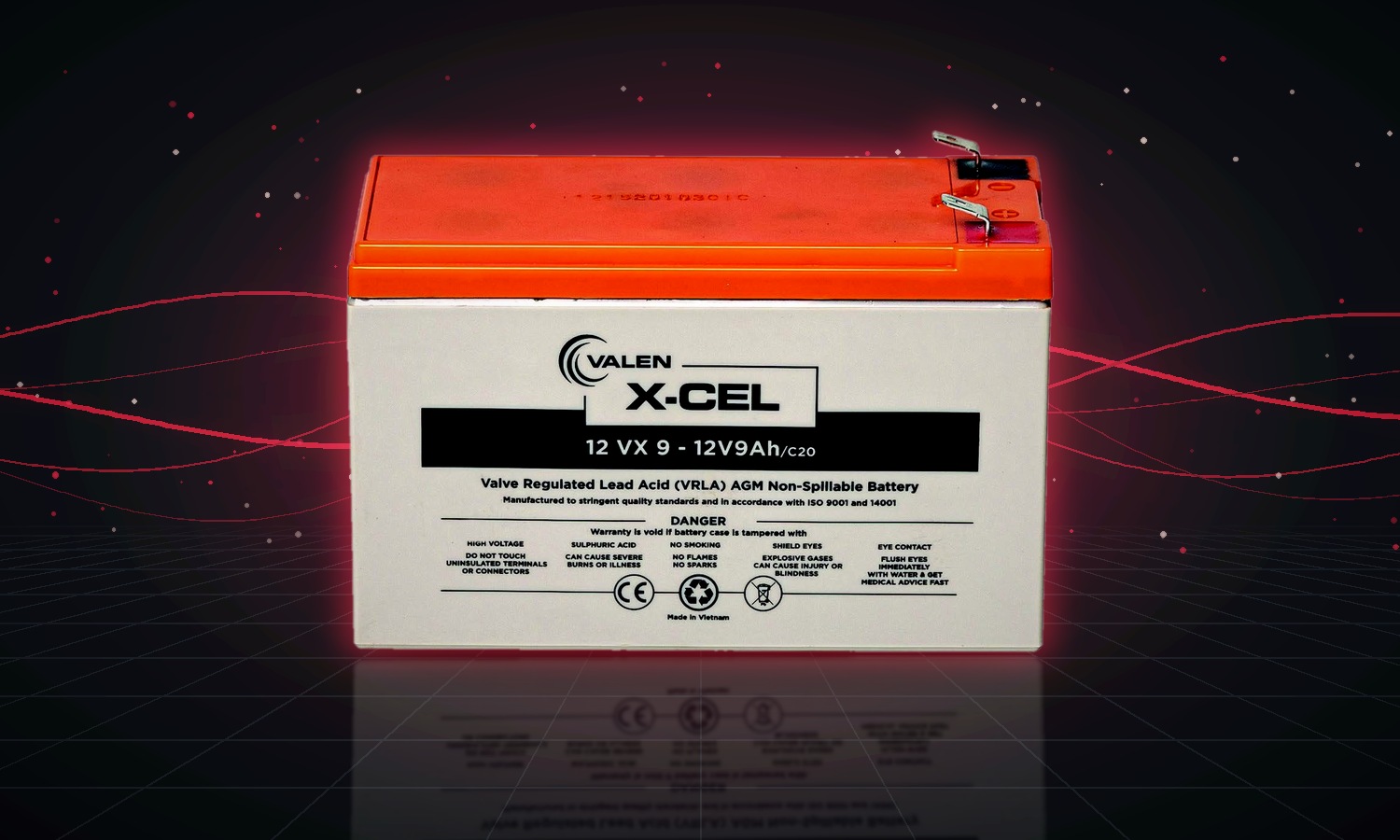
That's why every RackPower 1–10 kVA online UPS and battery cabinet uses Valen X-CEL 12VX9 batteries, rated for a 10-year standby design life. Most standard 12 V 9 Ah UPS batteries are rated for up to 5 years. Here's what that difference is based on, how the two compare on paper, and what it means for your rack.
10 yearsstandby design life
9 Ahat the 20-hour rate
18 mΩinternal resistance, fully charged
1.6% tinin the lead plates
The Valen X-CEL 12VX9 at a glance
The X-CEL 12VX9 is a valve-regulated lead-acid (VRLA) battery built on absorbent glass mat (AGM) construction, so it's sealed and maintenance-free. These are the key figures from Valen's datasheet:
| Type | VRLA AGM, sealed, maintenance-free |
|---|---|
| Nominal voltage | 12 V (6 cells) |
| Capacity | 9 Ah (20 h) · 8.2 Ah (10 h) · 7.7 Ah (5 h), to 10.5 V at 25 °C |
| Design life | 10 years standby |
| Internal resistance | 18 mΩ at 25 °C, fully charged |
| Float charge voltage | 13.2–13.8 V at 25 °C |
| Cycle charge voltage | 14.4–14.7 V at 25 °C |
| Dimensions | 151 × 65 × 94 mm (L × W × H) |
| Weight | 2.8 kg |
| Terminal | F2 (6.35 mm Faston) |
| Operating temperature | −20 °C to +60 °C (20–30 °C recommended for full life) |
| Transport | FAA and IATA approved |
Source: Valen X-CEL 12VX9 datasheet.
How it compares with a standard UPS battery
For comparison we've used the CSB HR1234W, one of the most common 12 V 9 Ah batteries found in UPS units. It's a good-quality, high-rate battery built for UPS work. The difference is what it's designed to prioritise.
| Valen X-CEL 12VX9 | CSB HR1234W | |
|---|---|---|
| Design life (standby) | 10 years | Up to 5 years at 25 °C (Eurobat: 3–5 years, standard commercial) |
| Nominal capacity | 9 Ah (20 h) | 9 Ah (20 h) |
| 15-minute power | 30.2 W per cell to 1.75 V/cell | 34.3 W per cell to 1.67 V/cell |
| Internal resistance | 18 mΩ | Approx. 19 mΩ |
| Weight | 2.8 kg | 2.5 kg |
| Dimensions | 151 × 65 × 94 mm | 151 × 65 × 94 mm (98.6 mm to terminal) |
| Terminal | F2 | F2 |
| Float voltage | 13.2–13.8 V | 13.5–13.8 V |
| Operating temperature | −20 °C to +60 °C | Discharge −15 °C to +50 °C; charge −15 °C to +40 °C |
From each manufacturer's published datasheet. CSB also makes a longer-life HRL series; the HR1234W is compared here because it's the battery most often found in standard UPS units.
What the numbers mean
Twice the design life
The headline difference is design life: 10 years against up to 5. Design life is how long a battery is built to last on float charge in ideal conditions, at around 20–25 °C. It isn't a guarantee of how long it will last in your comms room (more on heat below), but it tells you how the battery is engineered. Under the European battery industry classification, a 3–5 year battery is a "standard commercial" grade. A 10-year design sits in a higher-performance grade.
More lead, and a different alloy
The X-CEL weighs 2.8 kg against 2.5 kg, about 12% heavier in the same case size. In a lead-acid battery, extra weight generally means more lead in the plates, and thicker plates take longer to corrode, which is the main way VRLA batteries wear out on float charge. Valen also uses high-purity virgin lead with 1.6% tin in the plates, which the manufacturer says reduces sulphation and plate delamination. Both are common causes of early battery failure.
Similar power where it counts
For short, high-power discharges, the two are close. The CSB's 15-minute figure looks higher, but it's measured down to a lower cut-off voltage (1.67 V per cell against 1.75 V), which lets more energy out of the battery on paper. The two figures aren't directly comparable. Internal resistance, which governs how well a battery delivers high current, is almost identical: 18 mΩ against about 19 mΩ.
In other words, you aren't trading runtime for longevity.
Same size, same terminals
Both use the standard 151 × 65 × 94 mm case and F2 terminals, the most common format for 12 V 9 Ah UPS batteries. The X-CEL is a like-for-like fit.
A wider temperature range
The X-CEL is rated to operate from −20 °C to +60 °C, against −15 °C to +50 °C for discharge (and +40 °C for charging) on the CSB. That's useful headroom for UPS units in plant rooms, roadside cabinets or unconditioned spaces, although every lead-acid battery still lives longest at 20–25 °C.
Why a "9 Ah" battery doesn't give you 9 Ah in a UPS
A battery's amp-hour rating is measured over 20 hours. A UPS drains its batteries in minutes, and the faster you discharge a lead-acid battery, the less of its capacity you can use. Valen's discharge data shows exactly how much:
| Discharge time | Current | Usable capacity | Share of 9 Ah | Power per battery |
|---|---|---|---|---|
| 15 minutes | 14.6 A | 3.7 Ah | 41% | 181 W |
| 30 minutes | 8.91 A | 4.5 Ah | 50% | 106 W |
| 1 hour | 5.66 A | 5.7 Ah | 63% | 64 W |
| 3 hours | 2.20 A | 6.6 Ah | 73% | 24 W |
| 5 hours | 1.54 A | 7.7 Ah | 86% | 18 W |
| 20 hours | 0.45 A | 9.0 Ah | 100% | – |
Valen X-CEL 12VX9 at 25 °C to 1.75 V per cell. Power per battery is Valen's per-cell figure × 6 cells, at the battery terminals before inverter losses.
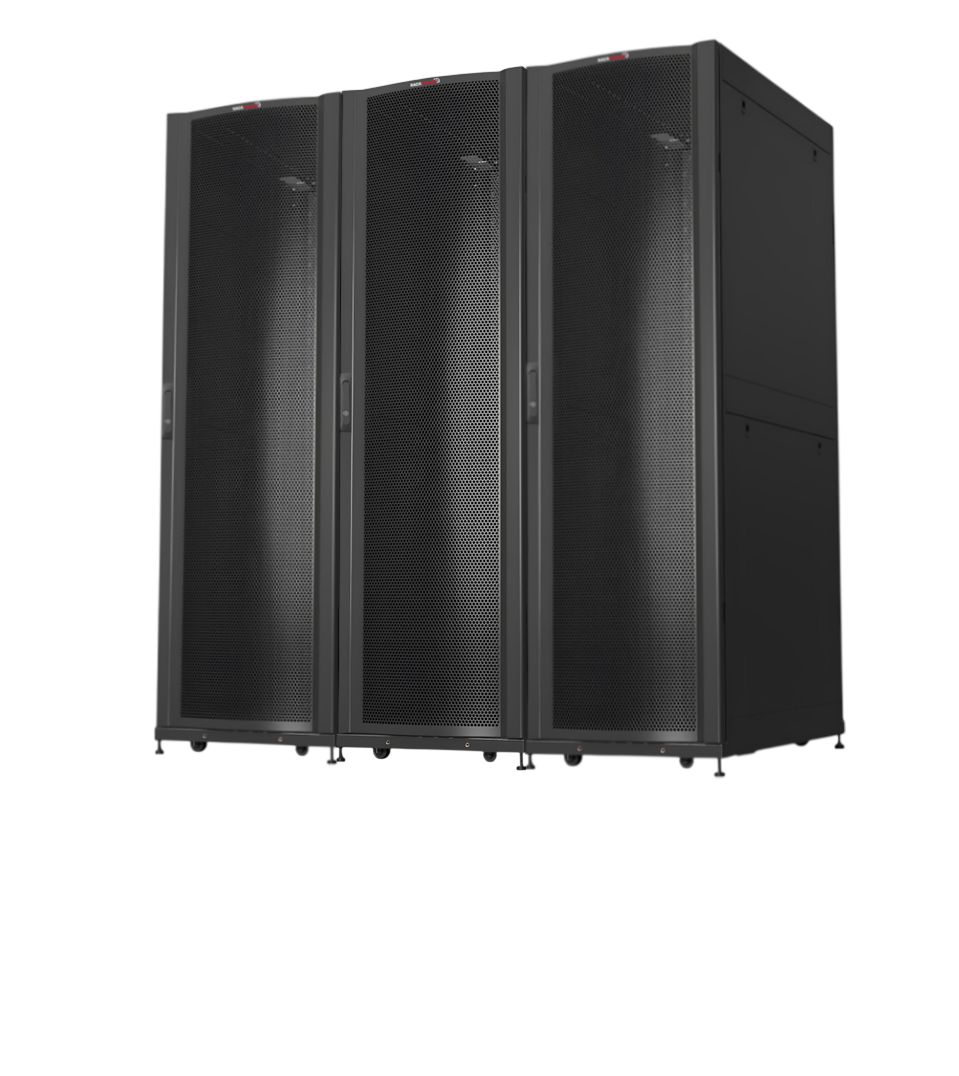
At a 15-minute discharge, you get about 41% of the rated capacity. This is why runtime isn't linear with load, and why you should always size from runtime tables rather than amp-hours. As a rough guide, the six batteries in a 2U rack battery cabinet can deliver around 1,090 W for 15 minutes at the battery terminals, before UPS conversion losses. For more on this, see how much UPS runtime your rack really needs.
Heat: the thing that really decides battery life
Design life assumes a cool room. Every lead-acid battery ages faster as temperature rises, and the common industry rule of thumb is that float life roughly halves for every 10 °C above 25 °C. Valen's own float-life curve shows the same steep drop with temperature. A battery in a warm, closed comms cupboard can last a fraction of its design life.
A longer design life gives you more margin when conditions aren't ideal. Try it:
Battery life vs room temperature
Move the slider to your comms room or cabinet temperature. Estimates use the rule of thumb above and are indicative only.
30 °C
Calculator loading. If this message does not change, JavaScript is being blocked on this page.
Keep it cool: mount the UPS and battery cabinets low in the rack, keep front and rear vents clear, and avoid sealed cupboards with no airflow. It's the cheapest way to get the full life out of any battery.
Design life isn't a replacement schedule
Even a 10-year battery should be checked, not assumed. A few practical points:
- Test once a year. Run a controlled battery test at a known load and record the runtime. A battery is generally considered at end of life when it can no longer deliver 80% of its rated capacity.
- Replace the whole string. UPS batteries work in series strings. Never mix new and old batteries, or different brands, in the same string: the weakest battery drags the others down and shortens their life. Order matching X-CEL batteries for the full string.
- Watch the float voltage. Overcharging shortens life as surely as heat does. If a UPS has ever been refitted with batteries from another source, check the charger settings suit them.
- Charge stored batteries. A spare battery or UPS sitting on a shelf slowly self-discharges. Top it up before installation.
When the time comes, RackPower stocks replacement Valen X-CEL 12 V 9 Ah batteries for our UPS range, along with external battery cabinets for longer runtime on the 2–10 kVA models.
Want a UPS that lasts?
Every RackPower 1–10 kVA online UPS ships with Valen X-CEL 10-year batteries. Tell us your load and runtime and we'll recommend the right UPS and battery setup.
Contact RackPower Call 0800 452 140